SIC Programme Dispatch
Empowering Learners
SIC Supports Rabuor and Angiro Comprehensive Schools with Stationery and School Fees
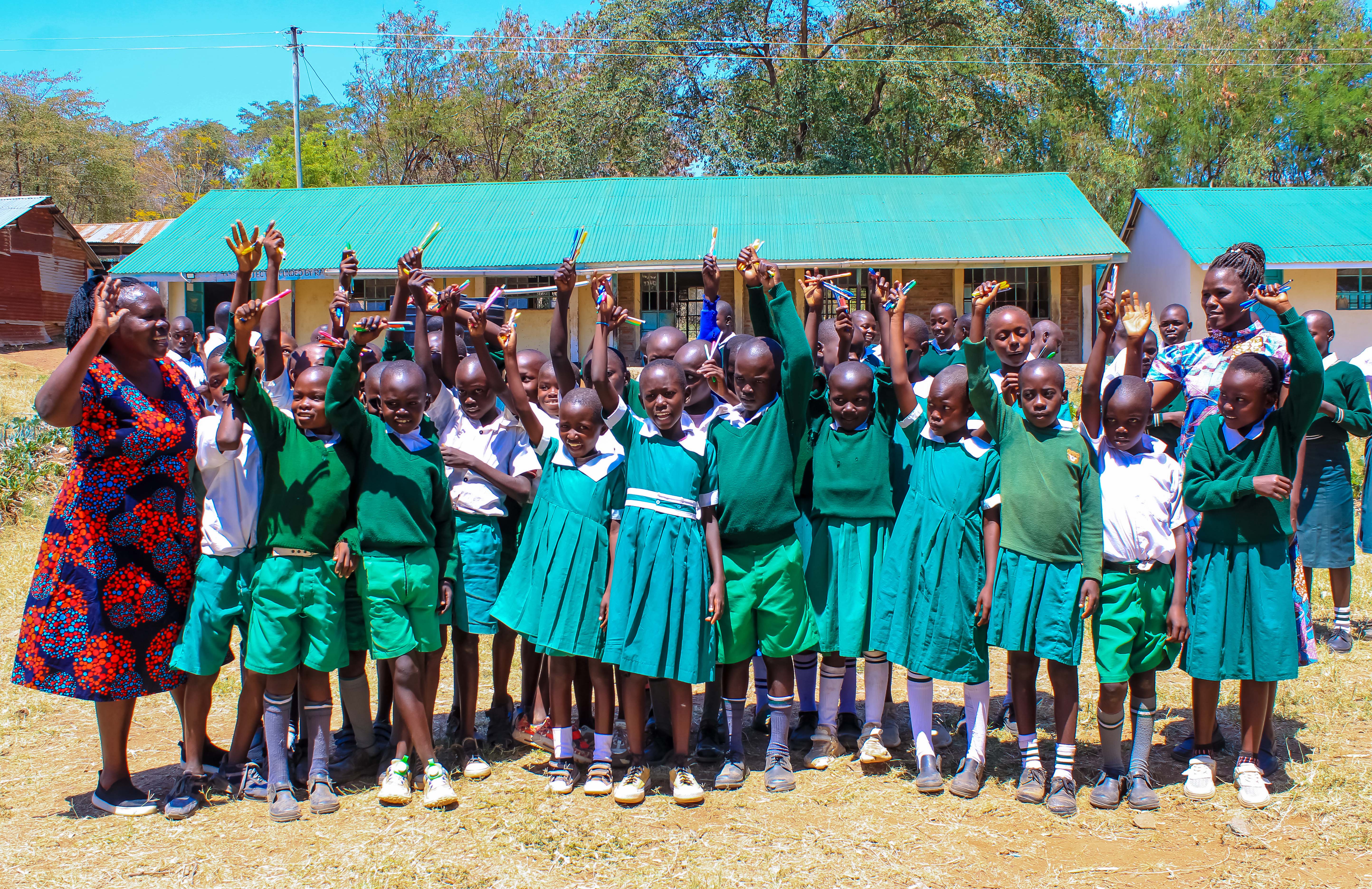
Students and staff gather at the distribution exercise held at Rabuor and Angiro Comprehensive Schools.
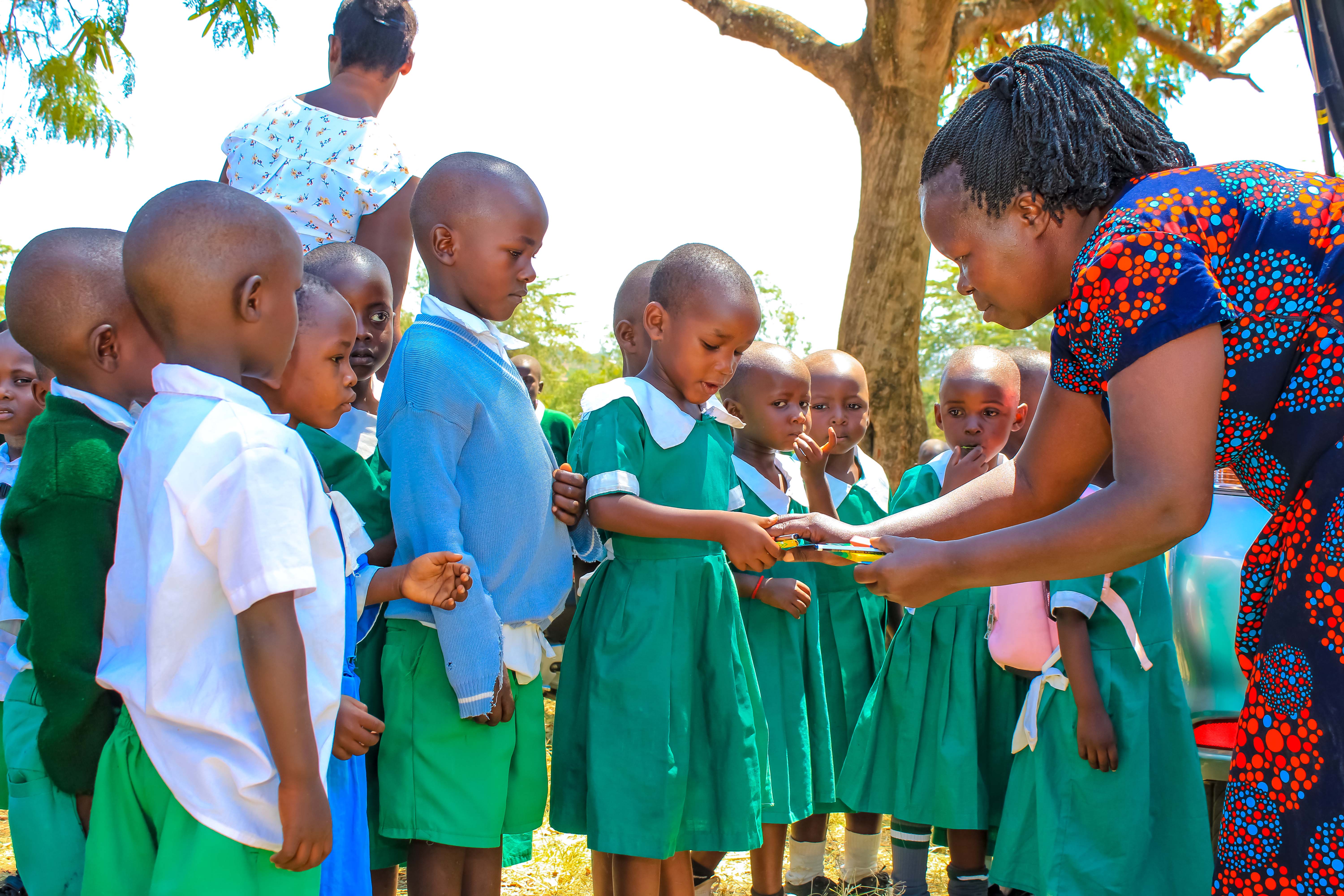
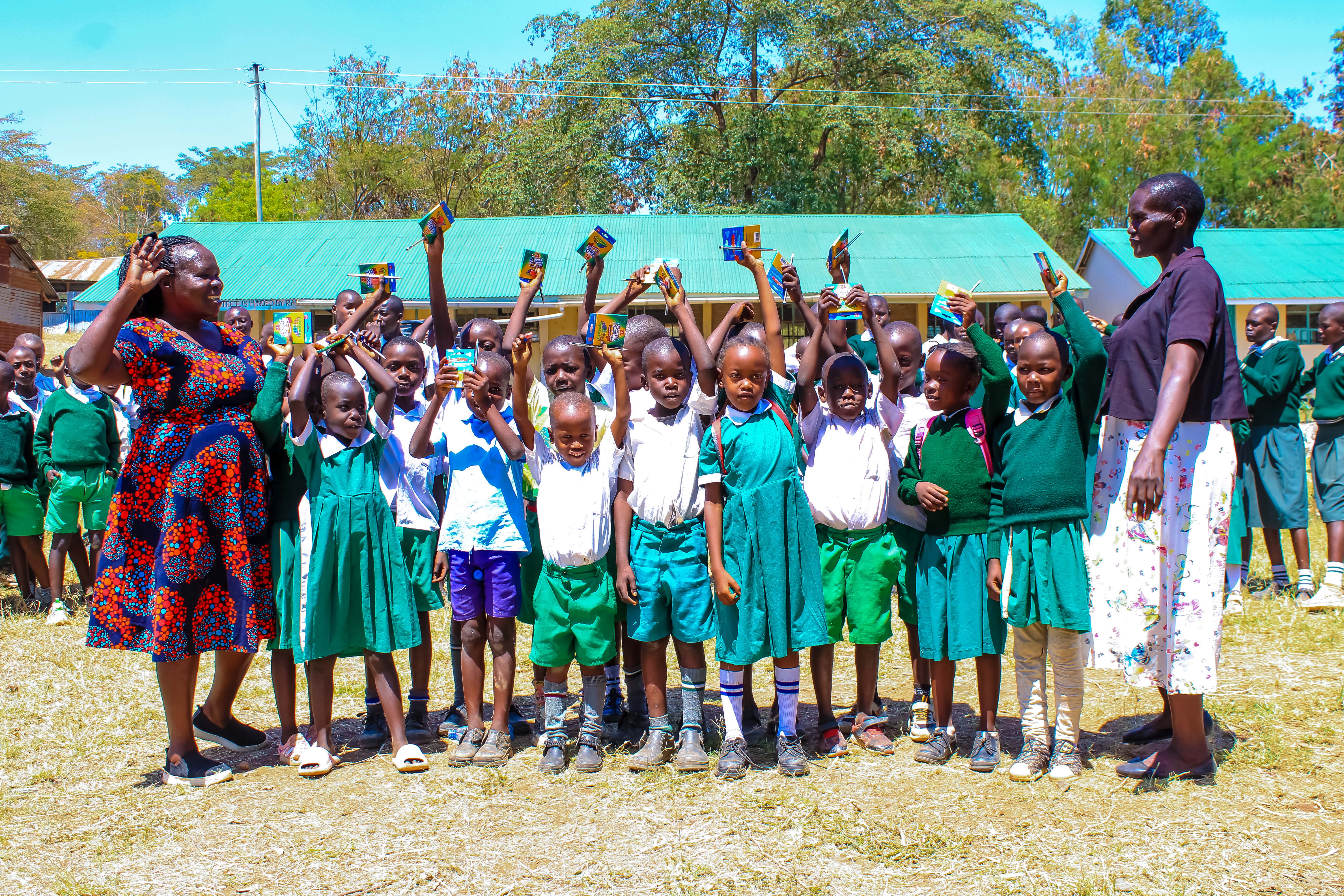
On Thursday, September 3, 2026, learners at Rabuor and Angiro Comprehensive Schools experienced a day of joy and renewed hope. The Sustainable Innovation Centre (SIC), in partnership with Ubuntu International, visited both schools to distribute essential stationery to students and to settle school fees for the students under our sponsorship programme.
Equipping Students for the Term Ahead
A term without the basic tools of learning can be a heavy burden for a child. To ease that burden, our team handed out stationery packages to students, including:
- Pencils
- Erasers (rubbers)
- Pens
- Crayon sets
These simple items make a real difference in a classroom — helping every child sit down, open their books, and learn without worry about what they lack.
“No child should be held back from learning simply because they lack a pen or the fees to stay enrolled.”
Keeping Sponsored Students in School
Alongside the stationery distribution, SIC also paid school fees for the students we sponsor at both institutions. Fees remain one of the biggest barriers keeping children out of the classroom, and by settling these payments, we are ensuring that our sponsored students can continue their education through the term without interruption.

Why This Matters
Education is one of the strongest tools for breaking the cycle of poverty in our communities. Every pencil handed out and every fee payment made is an investment in a child's future — and, ultimately, in the future of Homa Bay County.
SIC remains committed to walking alongside these schools and their learners, term after term.
Get Involved
If you would like to support a child's education through school fees, stationery, or other learning materials, reach out to SIC to learn how you can partner with us in transforming lives through education.
SIC Programme Dispatch
Dressed for Recognition
SIC Brands Kamanga and Angiro Women's Groups with T-Shirts and Lesos to Boost Confidence and Make Them Comfortable
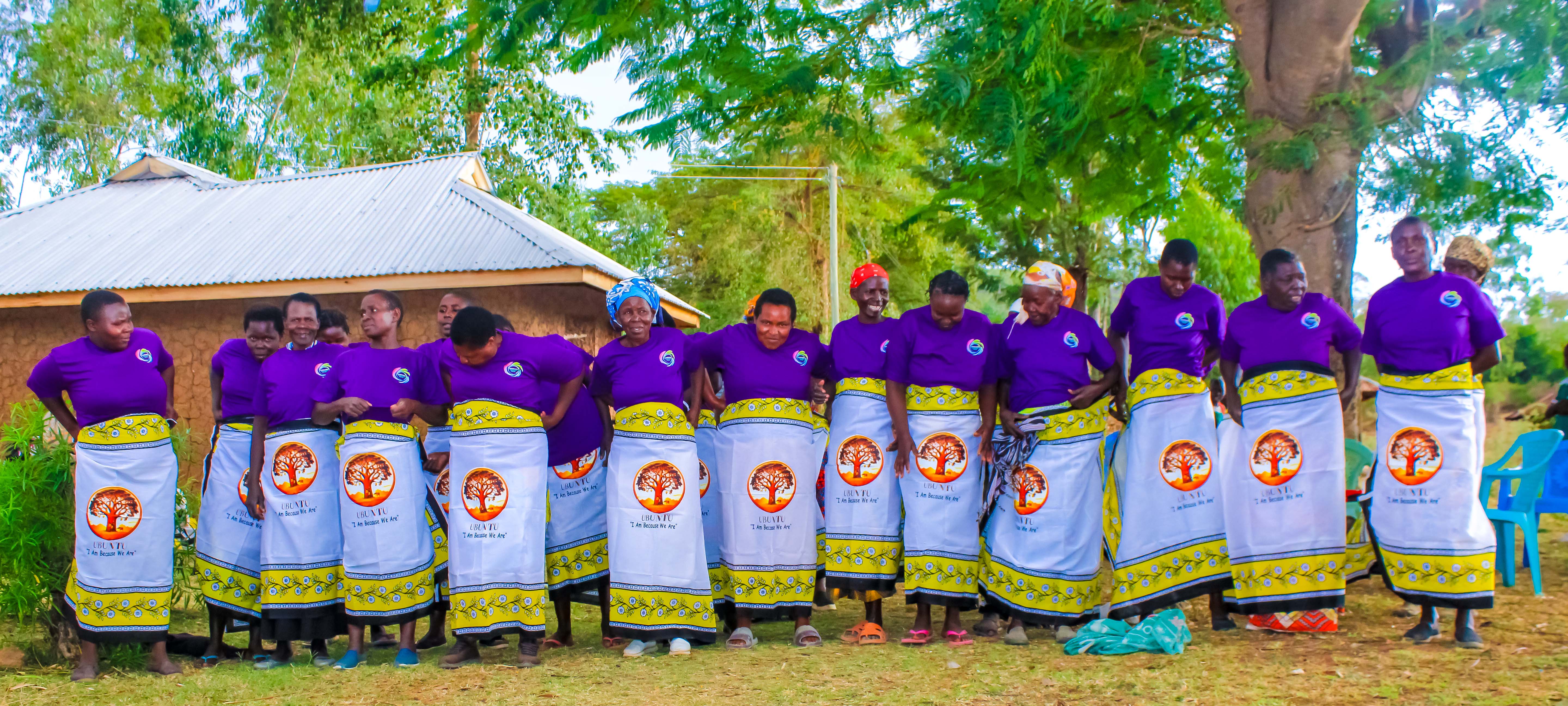
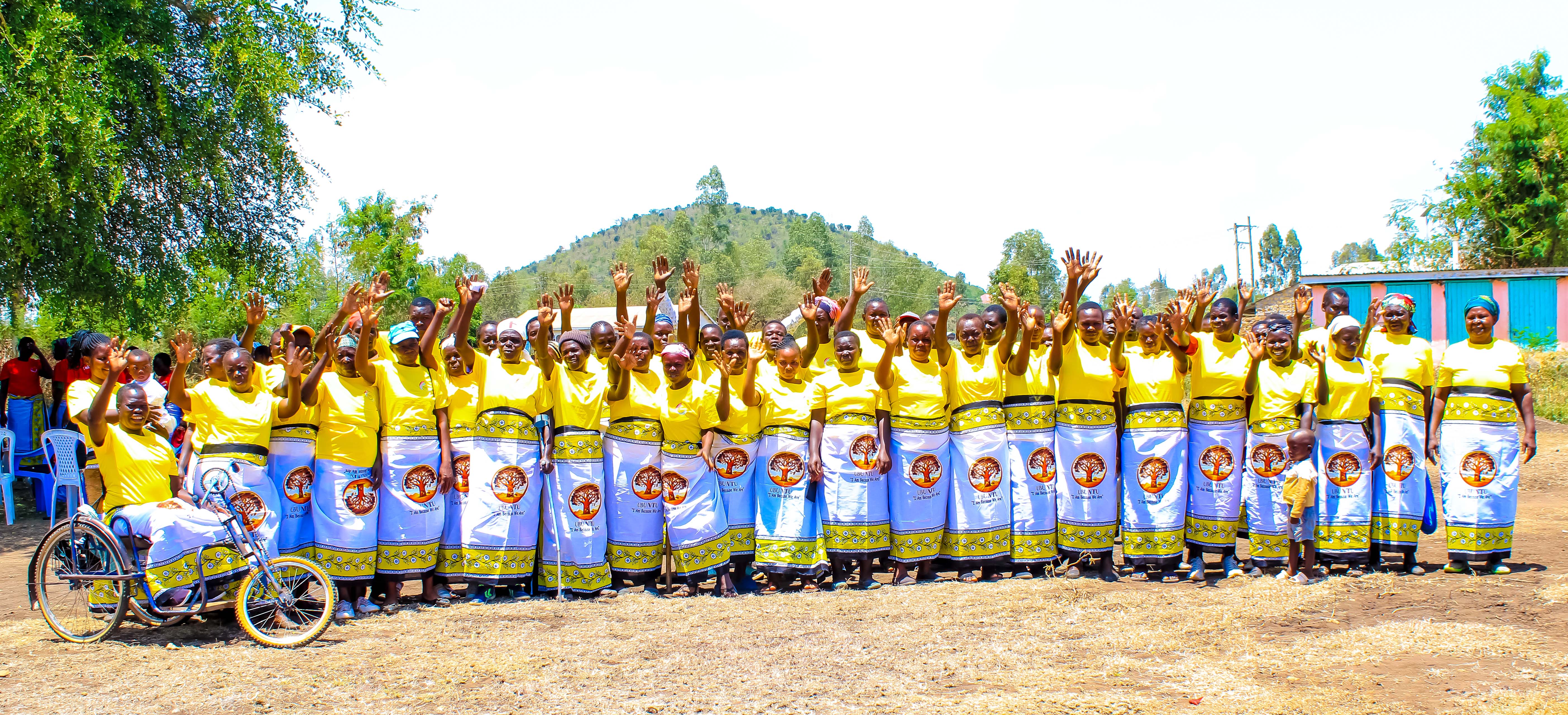
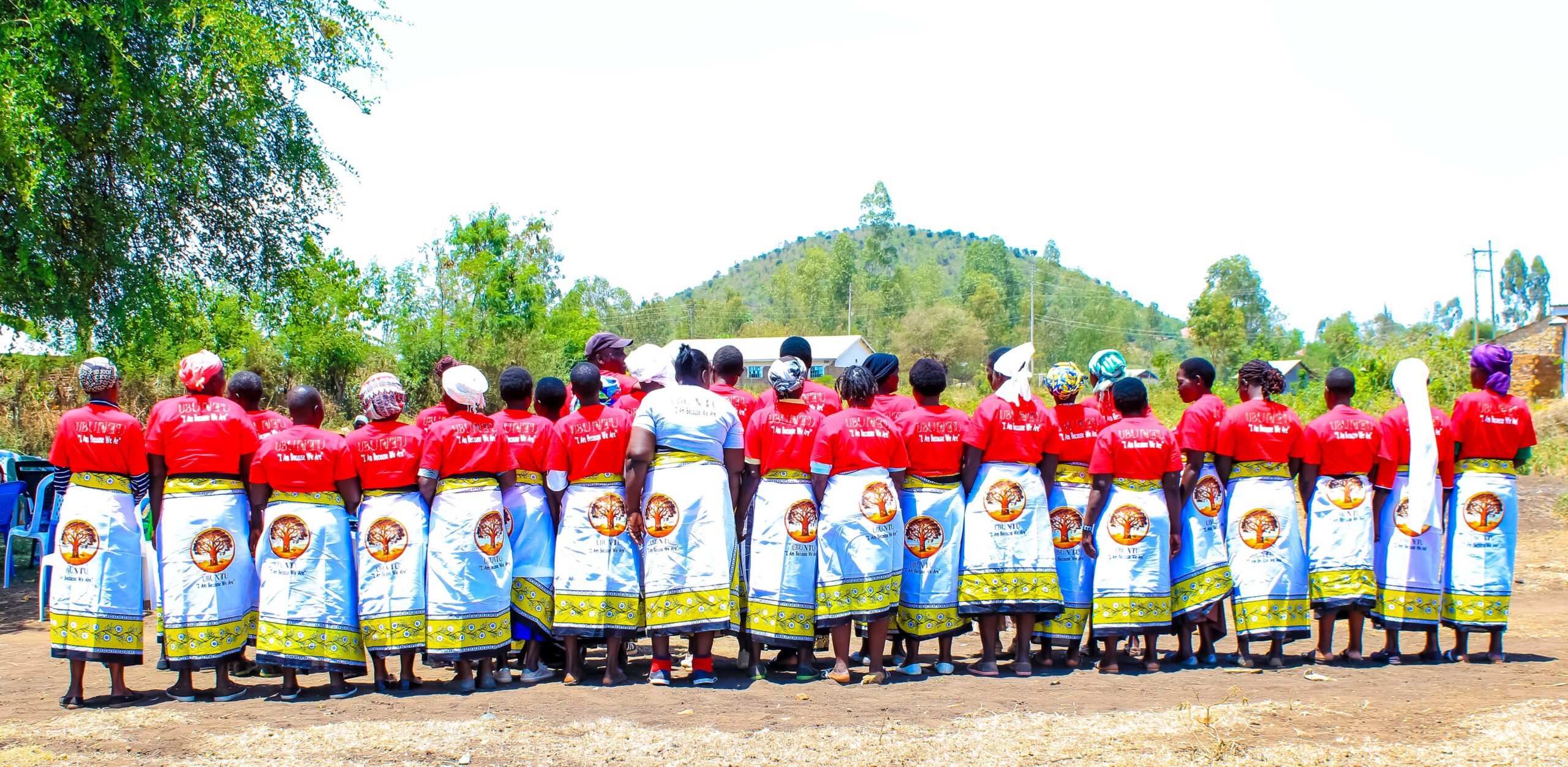
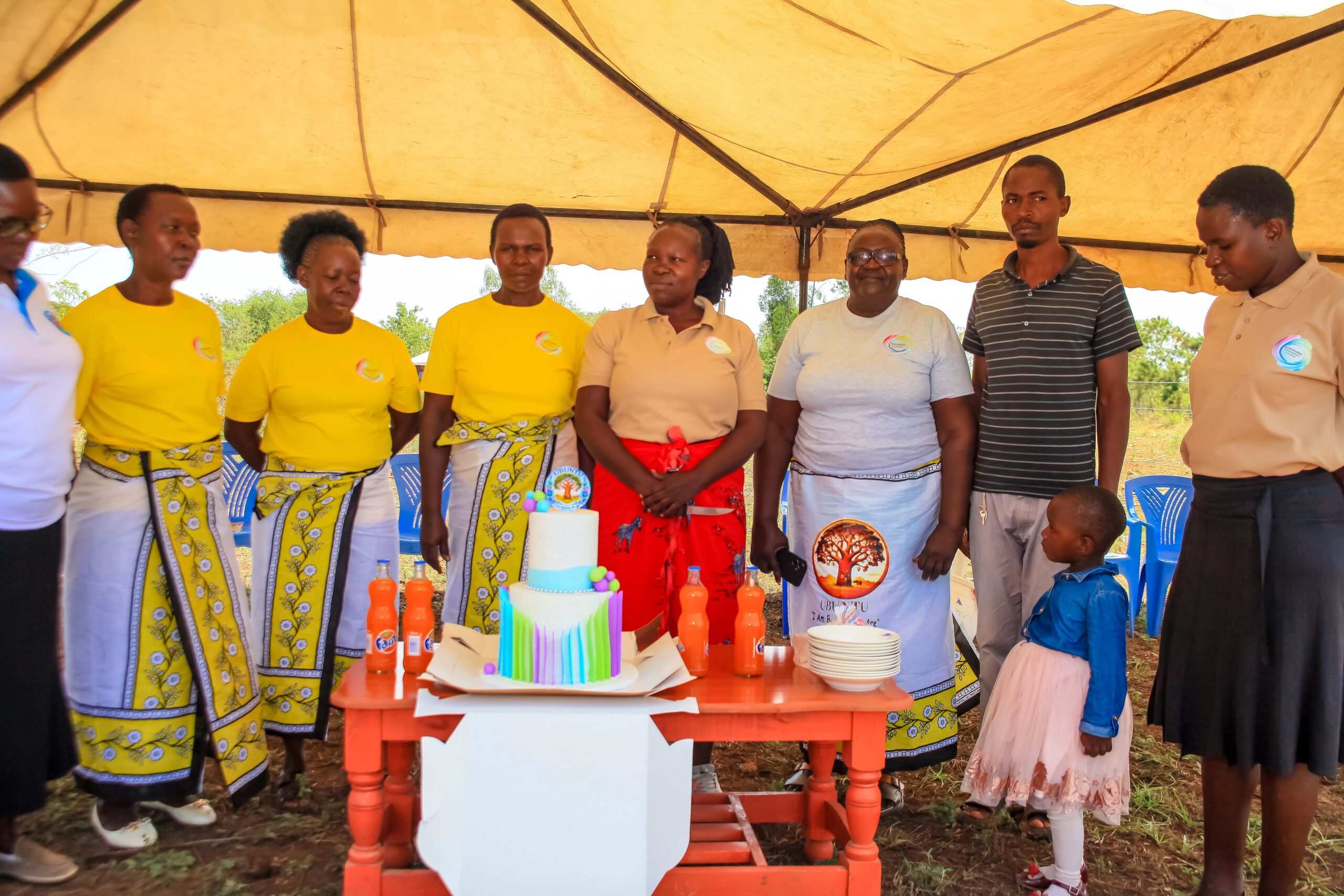
Members of the Angiro and Kamanga women's groups in their new branded t-shirts and lesos.
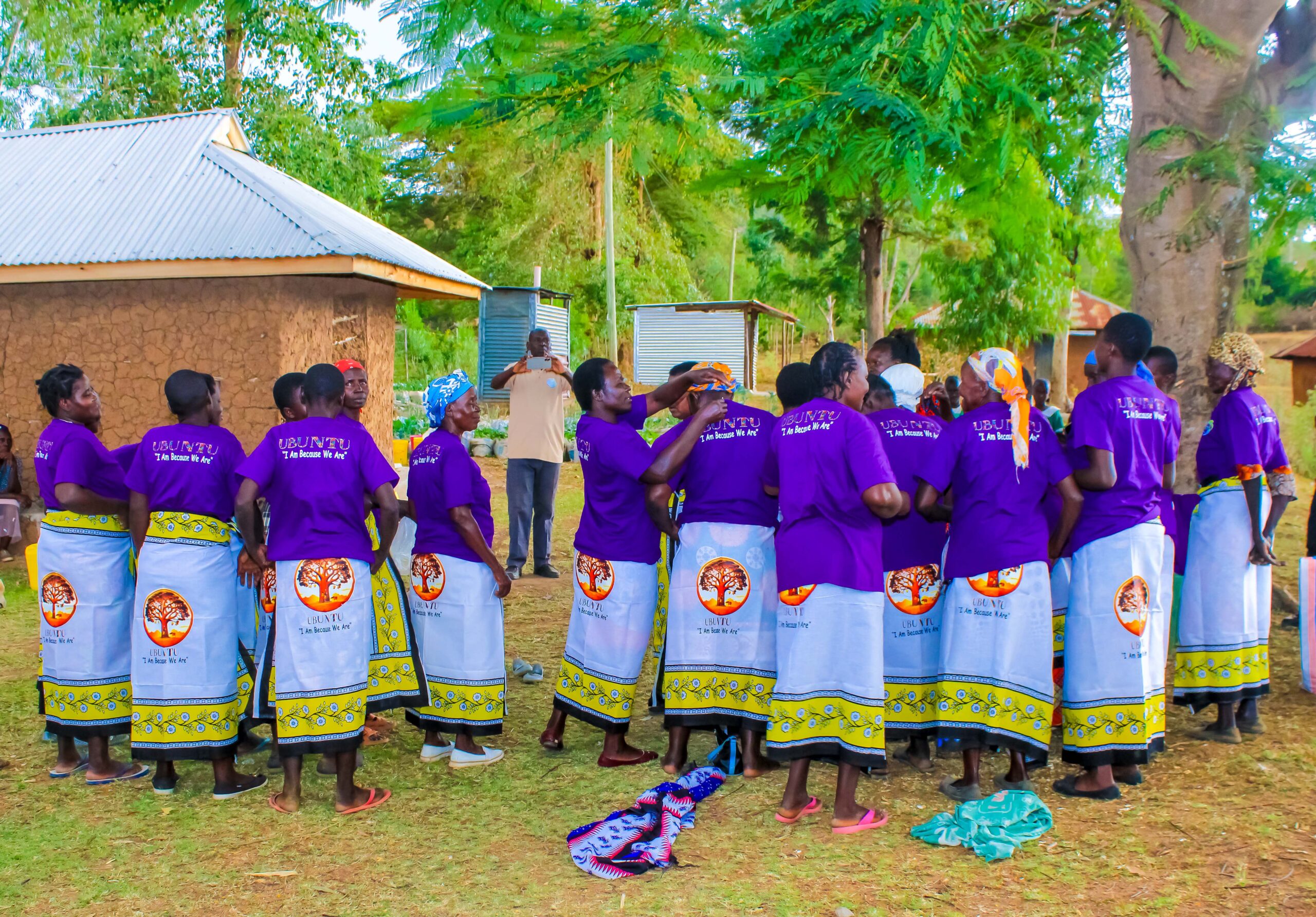
Identity matters. On Friday, September 4, 2026, the Sustainable Innovation Centre (SIC) branded the Kamanga and Angiro women's groups with matching t-shirts and lesos, giving both groups a stronger, more visible identity as they continue their table banking activities.
Why Branding Matters
Table banking groups thrive on trust, visibility, and a sense of shared identity. A branded t-shirt or leso is more than clothing — it is a statement that the group is organized, credible, and recognized. When members show up to meetings, markets, or community events dressed in their group colors, it builds confidence among members and signals reliability to potential partners, lenders, and customers.
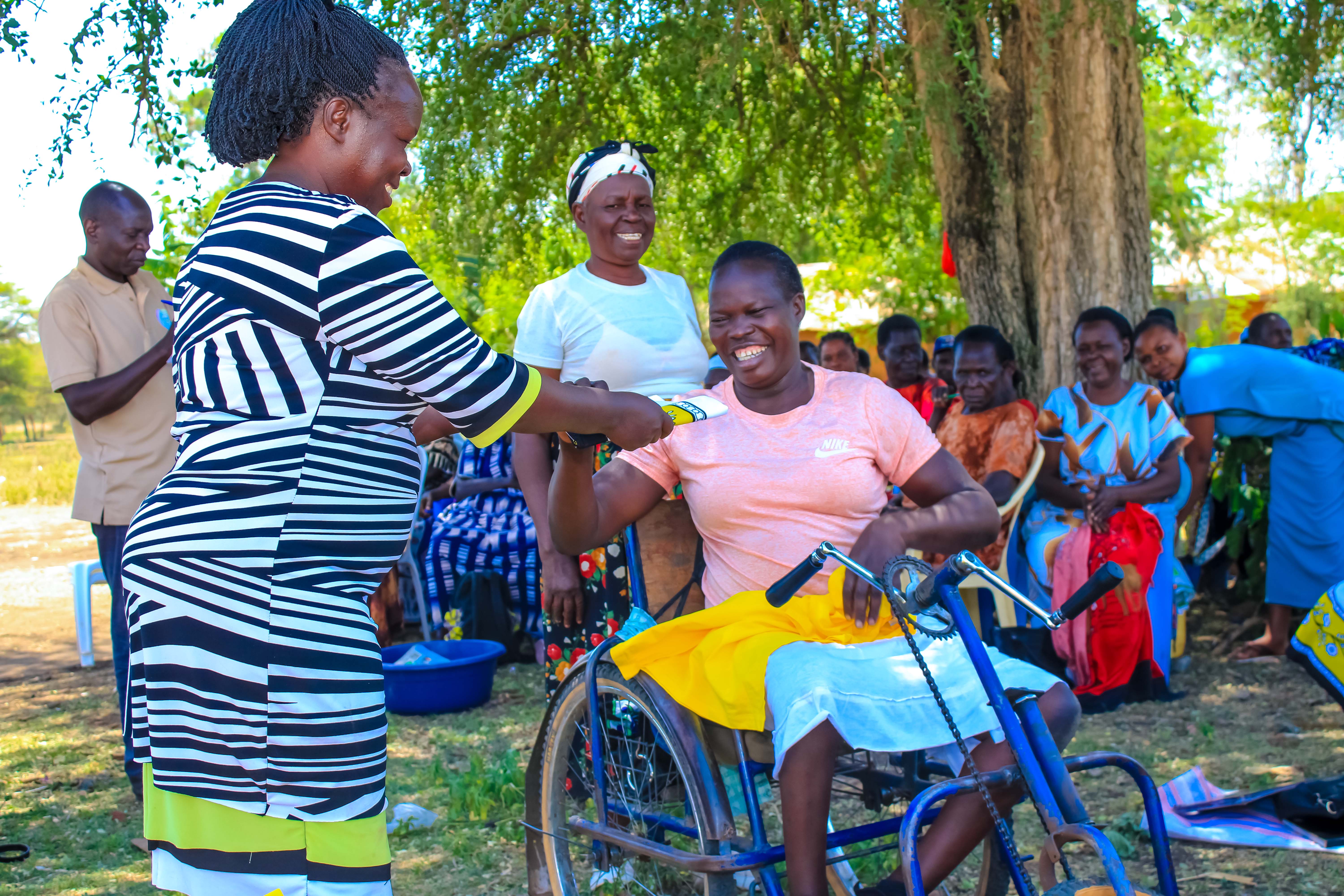
“A branded group is a group people remember, trust, and want to do business with.”
Boosting Table Banking
Both Kamanga and Angiro women's groups run table banking initiatives, pooling savings and offering members access to credit for small businesses, school fees, and household needs. With a stronger group image, SIC hopes to help these groups attract more members, build greater trust within the community, and open doors to future partnerships and support.
Looking Ahead
SIC will continue supporting women's groups across Homa Bay County with tools, training, and visibility initiatives like this one, as part of our broader commitment to women's economic empowerment.
Get Involved
If you would like to support women's groups through branding, training, or table banking capital, reach out to SIC to learn how you can partner with us.
SIC Programme Dispatch
From Despair to Dignity
Permaculture Has Transformed Angiro Comprehensive School
Angiro Comprehensive School today — a far cry from the dilapidated, dust-choked compound it once was.
There was a time when no parent wanted to send their child to Angiro Comprehensive School. Even families living just next door preferred to walk their children five kilometers to another school rather than enroll them at Angiro. Dilapidated classrooms with peeling walls, toilets that were in poor condition, dusty compounds with little shade or life, and a teaching staff stretched too thin to give learners the attention they deserved. Enrollment dwindled. Performance suffered. Angiro had become the school nobody wanted, abandoned in spirit long before it was abandoned in practice.
Sustainable Innovation Center (SIC) saw something different. Where others saw a failing institution, SIC saw an opportunity. The vision was bold: turn Angiro Comprehensive School into a vibrant, self-sustaining learning system, one where the school itself could generate the resources it needed to thrive. The tool that would make this vision was permaculture.
Growing More Than Food
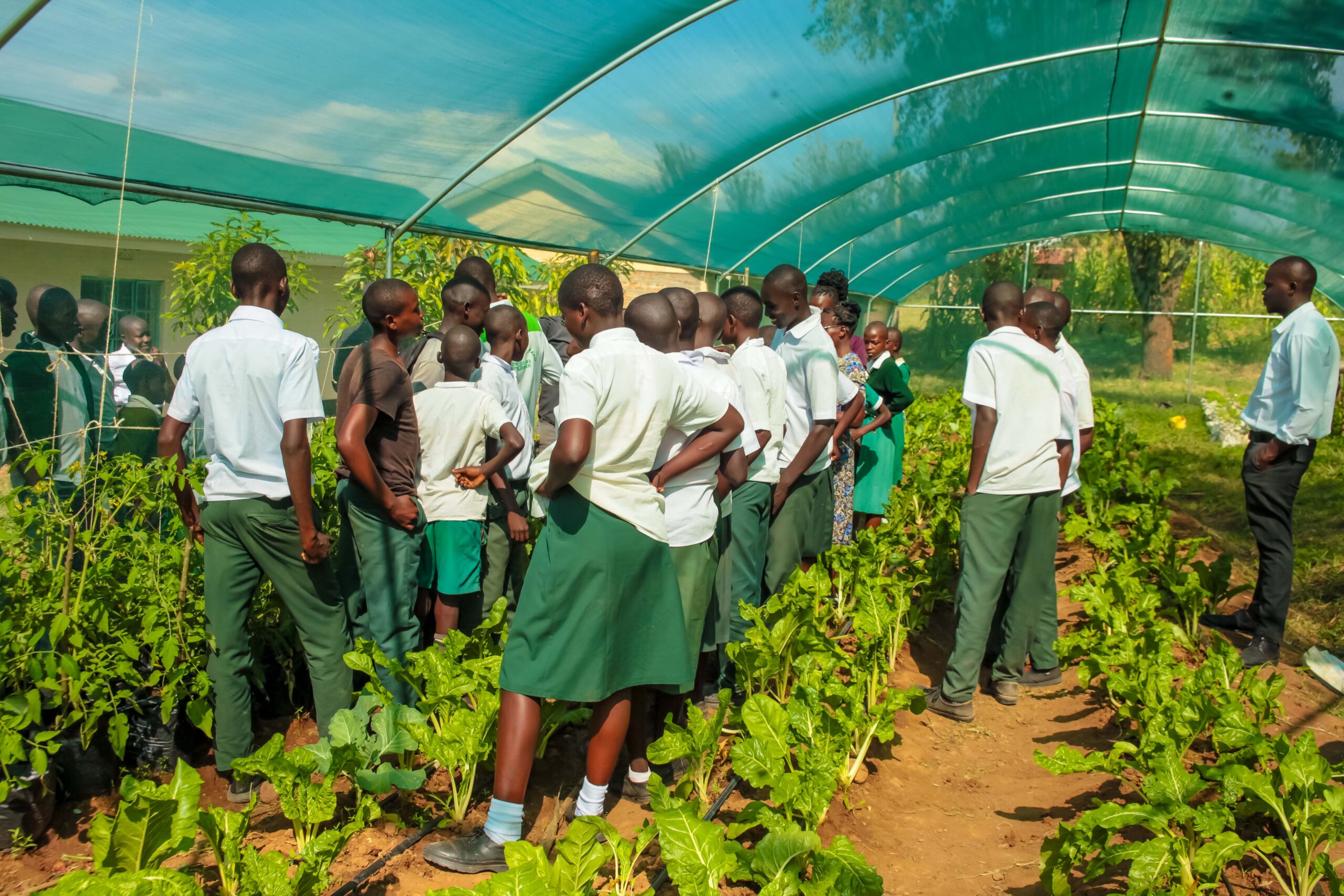
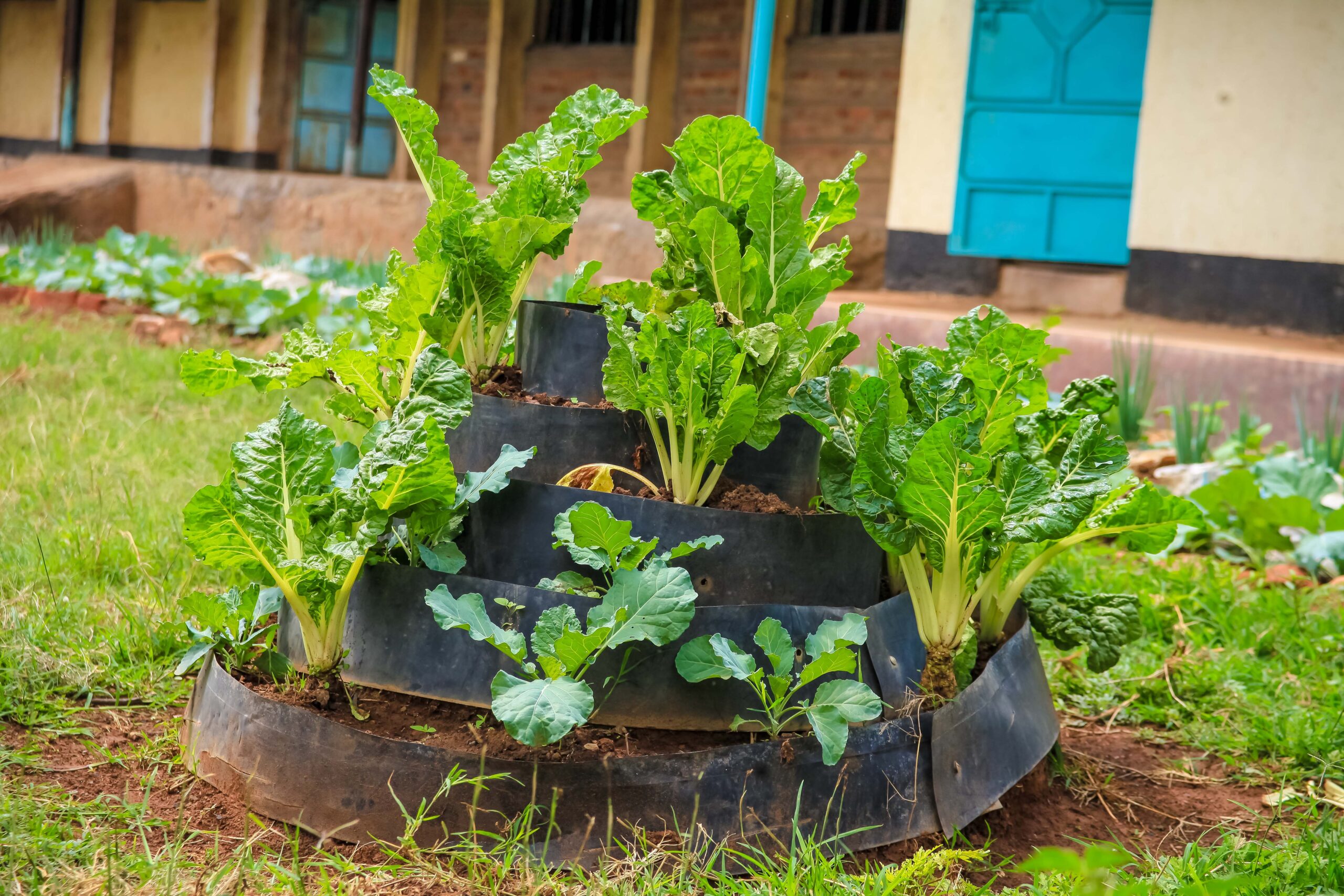
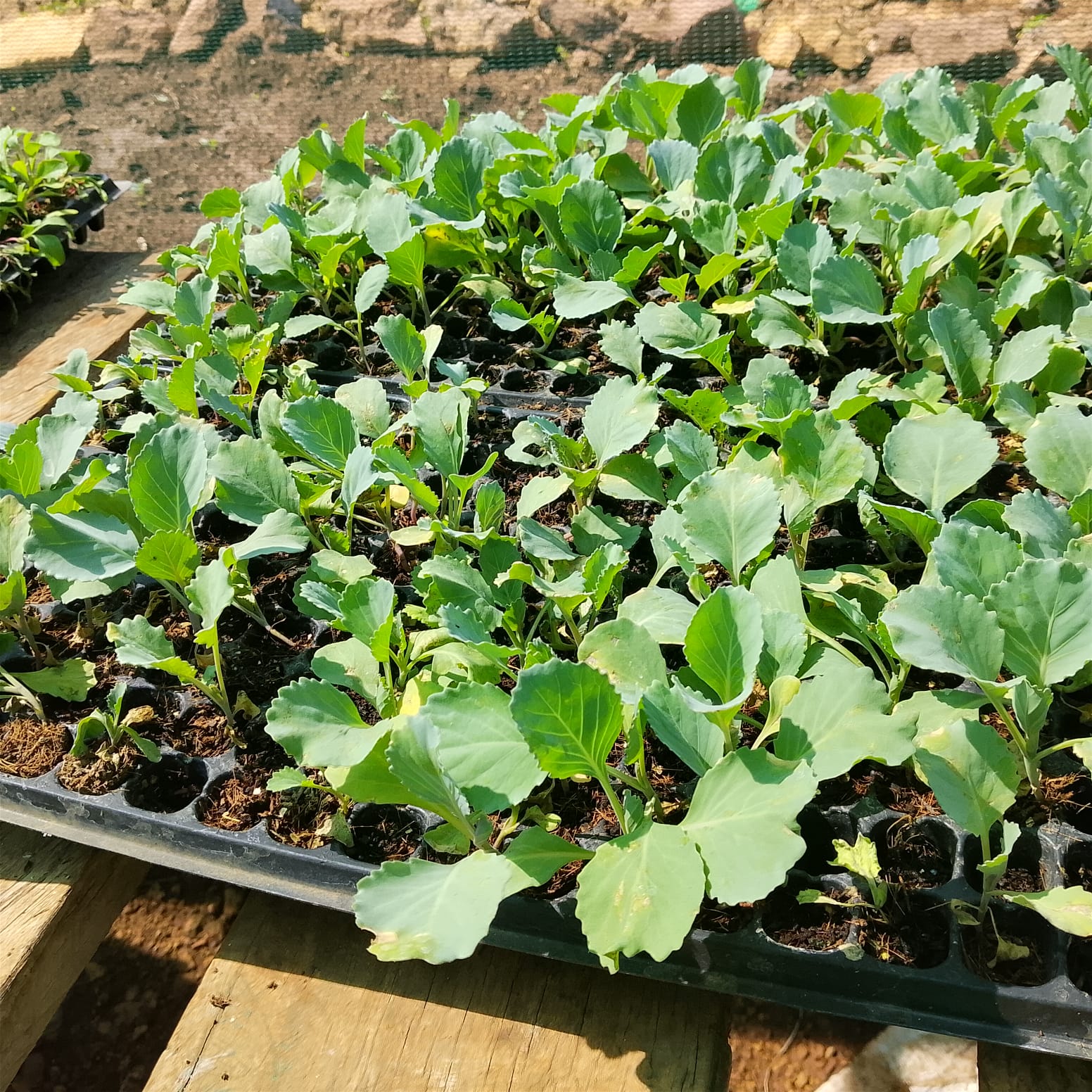
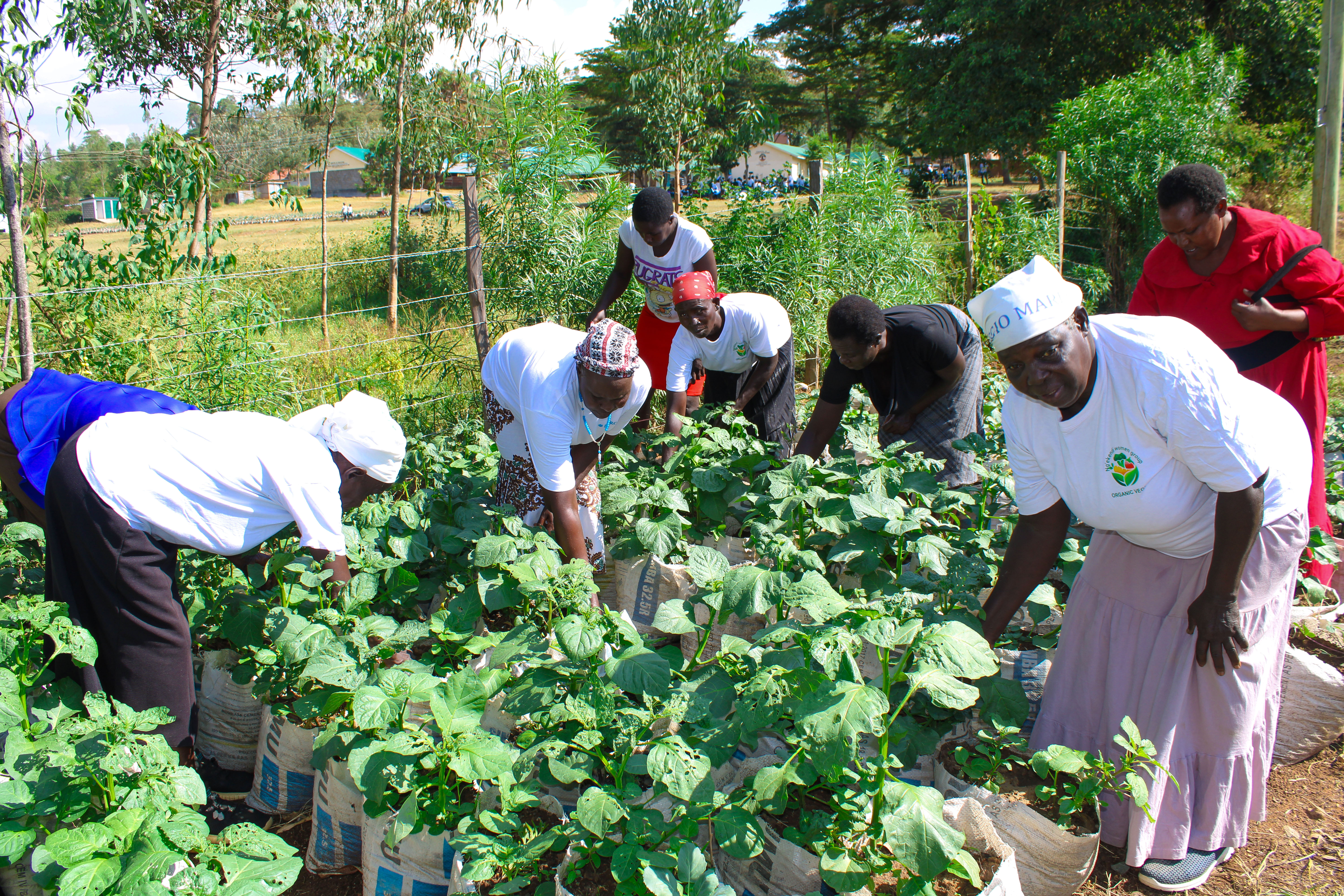
At the heart of Angiro's turnaround is a self-sustaining agricultural system modeled on nature itself, a living ecosystem grown right on the school grounds. Vegetables, onions, fruit seedlings, and indigenous leafy greens now flourish where dust once ruled, cultivated using permaculture methods that mimic the balance and efficiency of a natural ecosystem.
Unlike conventional farming, this approach is remarkably efficient. It uses less space, less water, and less time, while producing food that is richer in nutrients and far gentler on the environment. For a school with limited land and limited resources, that efficiency has made all the difference.
“It just requires the right seed, planted in the right place, and given room to grow.”
A School That Feeds Itself
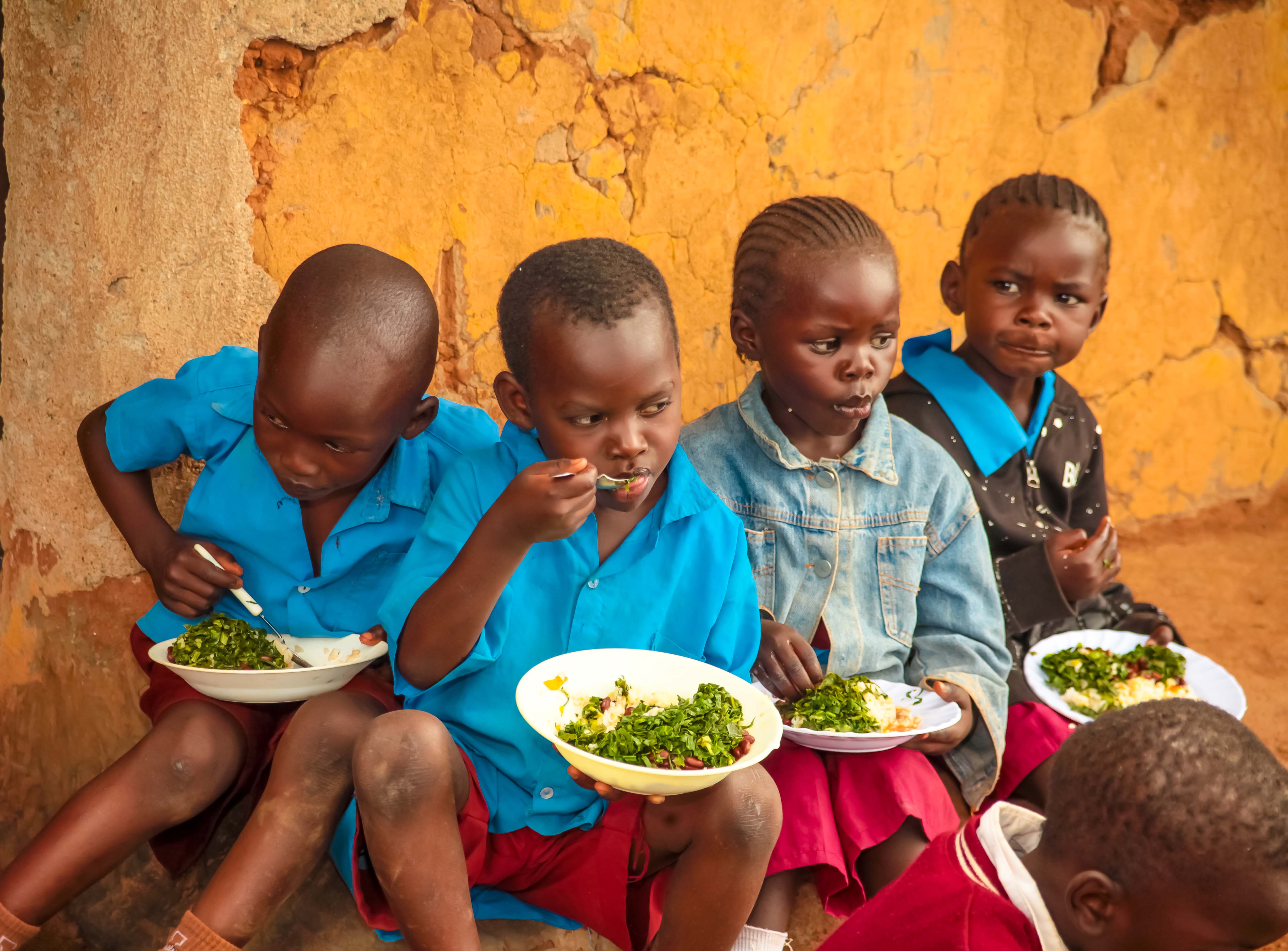
The impact has rippled far beyond the garden beds. Students at Angiro no longer need to walk home for lunch, a journey that, for some, ate up hours of learning time and left them too exhausted or hungry to focus once they returned. Now, nutritious meals grown steps from the classroom keep them fed, focused, and in school.
But the garden does more than feed students. Surplus crops are sold to the surrounding community, and the income generated goes directly toward school levies — easing the financial burden on families and keeping the school itself financially afloat. What began as a food security intervention has grown into a genuine economic engine for the institution.
Perhaps most remarkable is the shift happening in how students see their own futures. Where farming was once viewed as a fallback for those who couldn't "make it" academically, a number of Angiro's students now see permaculture and agriculture as a career path worth pursuing — a future they're excited about, not one they're settling for.
A Village Transformed Alongside Its School
The story of Angiro doesn't end at the school gate. As families in the community have watched the transformation unfold, many have taken permaculture principles home with them. Households across the village are now applying the same techniques on their own small plots, growing their own food, generating their own income, and building the same kind of resilience that revived their school.
What started as an intervention to save one struggling institution has become a movement reshaping how an entire community thinks about food, land, and self-sufficiency.
A New Chapter for Angiro
Angiro Comprehensive School is no longer the school parents avoid. It is becoming a model of what's possible when community-driven solutions meet genuine local needs — proof that sustainable change doesn't always require large infrastructure or outside rescue.
SIC remains committed to walking alongside Angiro and its surrounding community, season after season.
Get Involved
If you would like to support permaculture and food security programmes like this one, reach out to SIC to learn how you can partner with us in transforming schools and communities across Homa Bay County.
SIC Programme Dispatch
Dignity in Every Cycle
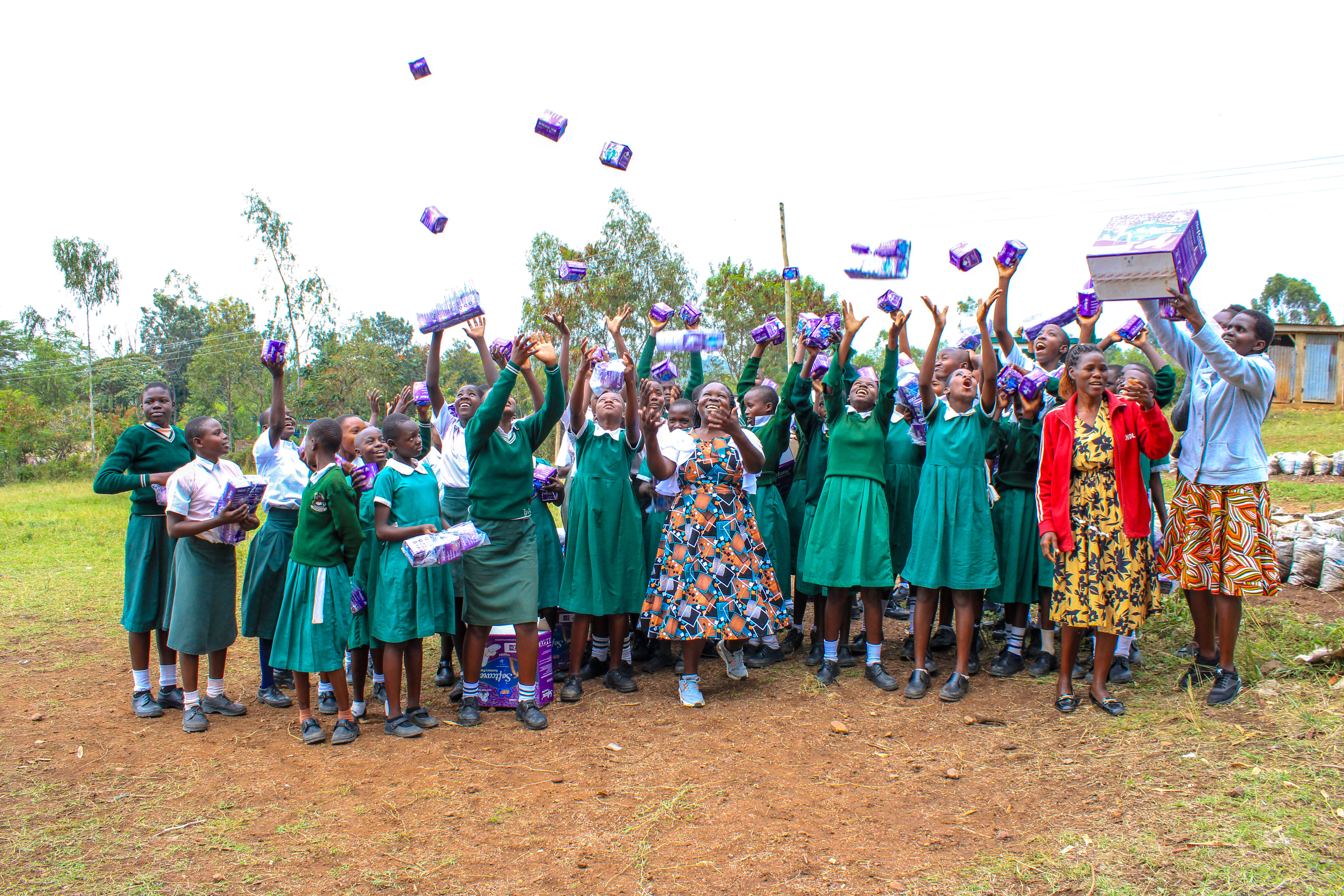
At Angiro, SIC reached teenage girls with sanitary pads and the knowledge to understand their own bodies before their first cycle begins.
For many teenage girls in rural Homa Bay County, the arrival of a monthly period brings more than physical discomfort it can mean missed classes, mounting anxiety, and silence around a subject too often treated as taboo. Yesterday, SIC took a direct step to change that story for girls at Angiro, distributing sanitary pads and menstrual health information to teenage girls determined to menstruate with dignity.
A Quiet Crisis in the Classroom
Across many under-resourced schools, the lack of access to sanitary products is one of the most overlooked barriers to girls' education. Without reliable supplies, girls often stay home during their periods, falling behind in lessons and, over time, losing confidence in their ability to keep pace with their peers.
Compounding the problem is a lack of accurate, age-appropriate information many girls reach puberty without understanding the changes happening in their own bodies, left instead to rely on rumor, shame, or silence. SIC's work at Angiro was designed to address both halves of this problem at once: supplies, and knowledge.
“Dignity is not a luxury item. It's a basic need, and one that a girl's education, confidence, and wellbeing depend on.”
What Happened at Angiro
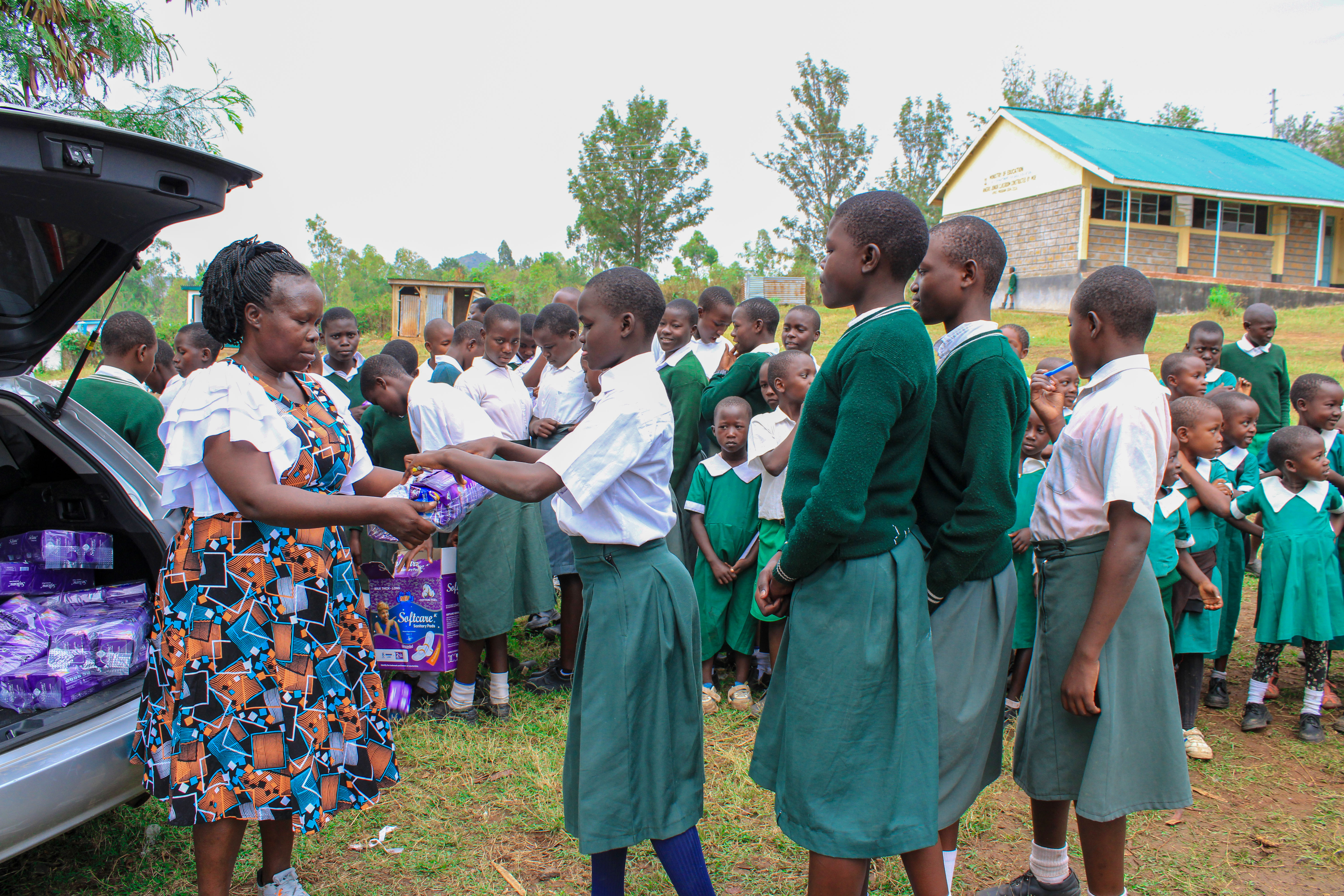
Yesterday's outreach saw SIC staff and volunteers distribute sanitary pads directly to teenage girls at Angiro, ensuring they have the materials they need to manage their periods safely, hygienically, and without interruption to their schooling.
Alongside the distribution, girls were given the chance to access accurate information about their bodies and menstrual health knowledge that matters most when it arrives before a girl's first cycle begins, not after confusion and fear have already taken root.
Part of a Larger Commitment
This distribution is not an isolated gesture it's one thread in SIC's broader programme of work across Homa Bay County, which spans climate-smart agriculture, water infrastructure, women's economic empowerment, school programmes, and community development. Menstrual health sits at the intersection of several of these priorities: it is a health issue, an education issue, and a gender equity issue all at once.
By reaching girls before their cycles begin with clear, age-appropriate information not just supplies after the fact SIC is working toward a standard where no girl in Angiro, or anywhere SIC operates, has to choose between her education and her body.
Get Involved
If you would like to support menstrual health and dignity programmes like this one, reach out to SIC to learn how you can partner with us in transforming lives across Homa Bay County.
SIC Programme Dispatch
A Bowl That Keeps Them in Class
At Angiro Comprehensive School, SIC's daily porridge programme is quietly doing what policy alone could not: keeping hungry children in their seats and in their lessons.
For many children in rural Homa Bay County, the walk to school begins on an empty stomach. Poverty and food insecurity mean that by mid-morning, hunger has already done its damage concentration fades, energy drops, and for some children, the pull to simply stay home becomes too strong to resist. At Angiro Comprehensive School, SIC's porridge programme was built to meet that hunger head-on, one cup at a time.
Hunger as a Barrier to Learning
Teachers at Angiro describe a familiar pattern: attendance dips sharply during the leanest points of the agricultural calendar, when household food stocks run lowest. Children who do make it to class often struggle to focus, and over time, chronic hunger becomes one of the quiet, unspoken reasons a child falls behind or drops out altogether.
Girls are especially vulnerable, frequently kept home to help with domestic or income-generating work when food is scarce. Without a reliable meal to anchor their day, school can start to feel like a place children simply cannot afford to be.

“A full stomach is the first lesson of the day. Without it, nothing else a child learns that morning truly sticks.”
What Happens Every School Day
Each school day at Angiro Comprehensive School, pupils receive a nutritious cup of porridge prepared and served through SIC's feeding programme. It is a simple intervention, but a consistent one, and that consistency is exactly what makes it work: children know that whatever else the day holds, they will not sit through their lessons hungry.
Head teachers and community mobilizers report the results directly better attendance, sharper concentration in class, and fewer children quietly slipping away from school altogether. For many families, the porridge programme has become one dependable meal in an otherwise uncertain day.

A Programme the Community Owns
The porridge programme is not something delivered to Angiro from the outside it is prepared and sustained by the community itself. Women's groups affiliated with SIC, including groups such as Kamanga, Ngee Kendi, and Kangongo, take an active role in preparing and distributing the porridge each day, turning the initiative into a source of local livelihood as well as nourishment.
This shared ownership is what gives the programme its staying power. It is not treated as a one-off donation, but as a daily responsibility the community has taken on for its own children, which is exactly why it continues to work.
Get Involved
If you would like to support school feeding programmes like this one, reach out to SIC to learn how you can partner with us in keeping children like those at Angiro Comprehensive School in the classroom.
SIC Programme Dispatch
Breaking Ground in Kamanga
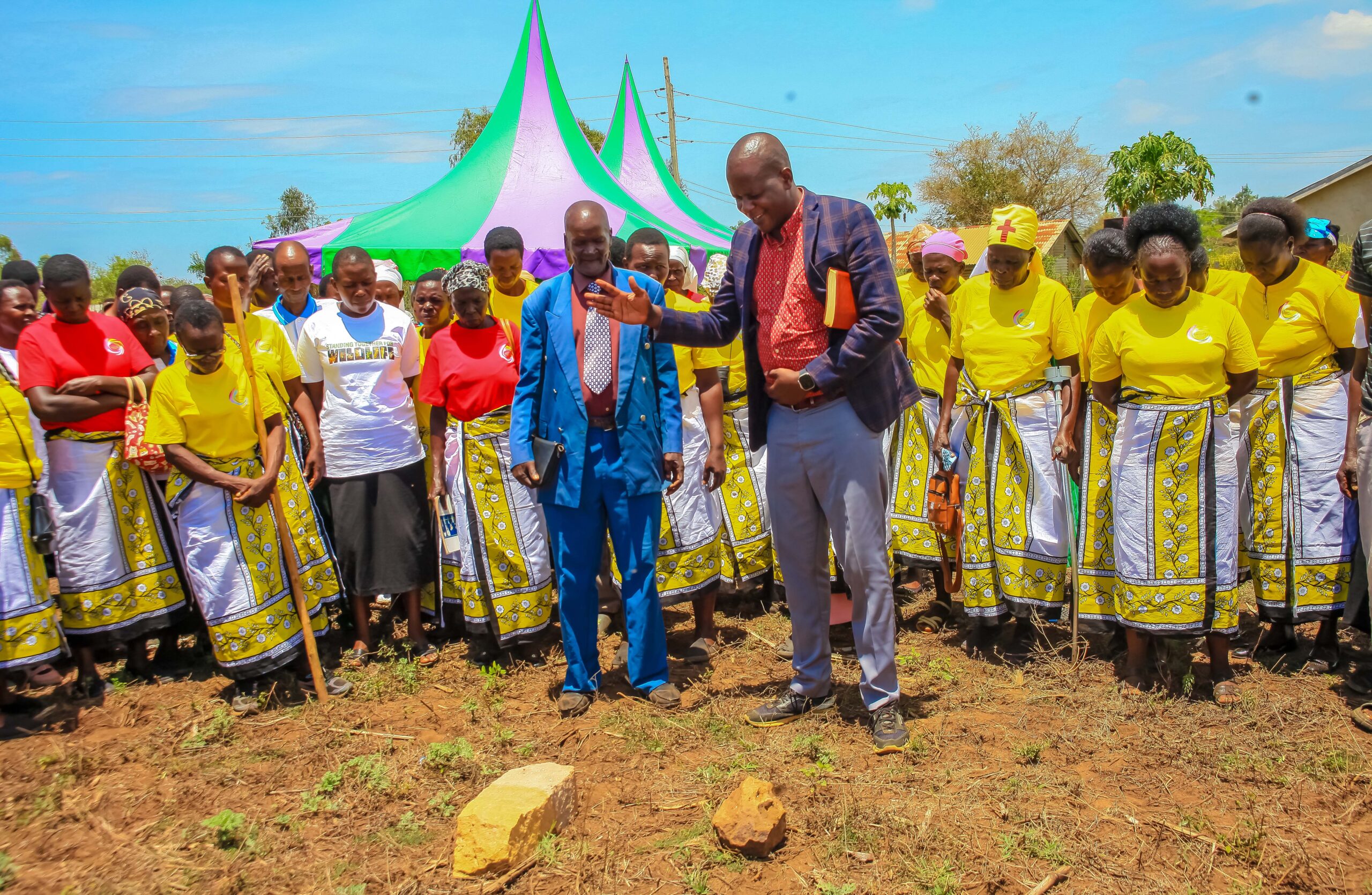
A decade of scattered grassroots work is about to get a home. SIC's inauguration ceremony in Kamanga Village marked the start of construction on a new central hub for Homa Bay County.
There are milestones you plan for, and then there are milestones you build toward for years. For the Sustainable Innovation Centre (SIC), the inauguration ceremony held in Kamanga Village, Homa Bay County, was firmly the latter: the moment a decade of grassroots work finally broke ground into something permanent.
A Long Road to This Day
SIC has spent years as a quiet but constant presence in Homa Bay's community development story, from climate-smart agriculture and water infrastructure to women's economic empowerment, menstrual health, education, and grassroots innovation programmes. The work has always been real, but it has also always been dispersed: run from wherever it could be coordinated, without a true home base.
That changes with the new central hub in Kamanga Village. Once complete, the facility will do more than house offices. It will serve as SIC's learning centre, its coordination point, and the operational heart from which all of its grassroots sustainable development work across Homa Bay County is overseen.
The Day Itself
The ceremony brought people together in a way that said a lot about what SIC has built over the years: not just programmes, but trust. Government dignitaries stood alongside community members who turned out in strong numbers, all there to mark the same thing: the official start of construction.
Anne, speaking on the occasion, pointed to SIC's track record as a trusted face of community development in the county, and voiced confidence that this new centre would allow the organization to reach even further in the years ahead. It was a sentiment echoed by the crowd. This wasn't an ending or a formality, but the opening chapter of something bigger.
“This isn't an ending or a formality. It's the opening chapter of something bigger.”
None of it would have been possible without the continued backing of Ubuntu International, SIC's long-standing partner, whose support made the ceremony and the construction it celebrates a reality.
Why This Hub Matters
It's easy to think of a building as just infrastructure. But for SIC, this centre is strategic. Once operational, it will serve as a hub for learning, training, and knowledge-sharing on sustainable innovation and grassroots development; act as the central coordination point for SIC's activities across Homa Bay County; provide the operational base for overseeing grassroots sustainable development processes; and give community members, partners, and stakeholders a real place to gather and engage with SIC's work.
In short, it turns years of distributed effort into something consolidated, visible, and easier to grow from.
What Comes Next
Construction will proceed in phases, with SIC keeping government stakeholders and community members engaged throughout. In parallel, the organization is preparing the operational structure so that the centre can begin functioning the moment building concludes, with no lag between the last brick and the first programme run out of it.
A Milestone Worth Celebrating
For an organization that has spent over a decade being the face of community development in Homa Bay, the Kamanga Village groundbreaking isn't just a construction update. It's a statement of intent. With Ubuntu International, government partners, and the community standing behind it, SIC isn't just building a hub. It's building the foundation for the next decade of grassroots impact.
Follow the Build
If you would like to support the construction of the Kamanga Village hub or partner with SIC on its grassroots programmes, reach out to learn how you can get involved.
SIC Programme Dispatch
Dignity Starts With a Change of Clothes
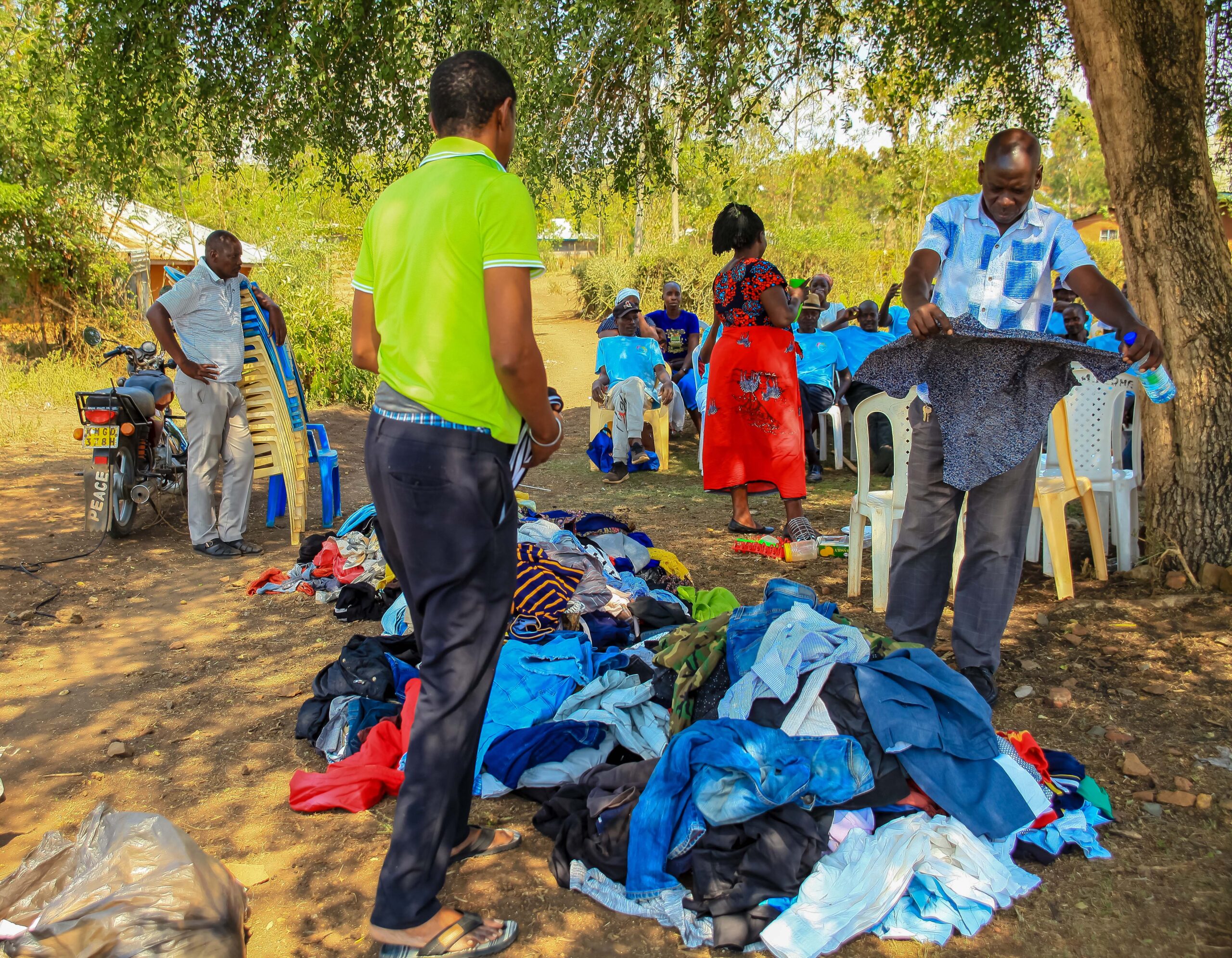
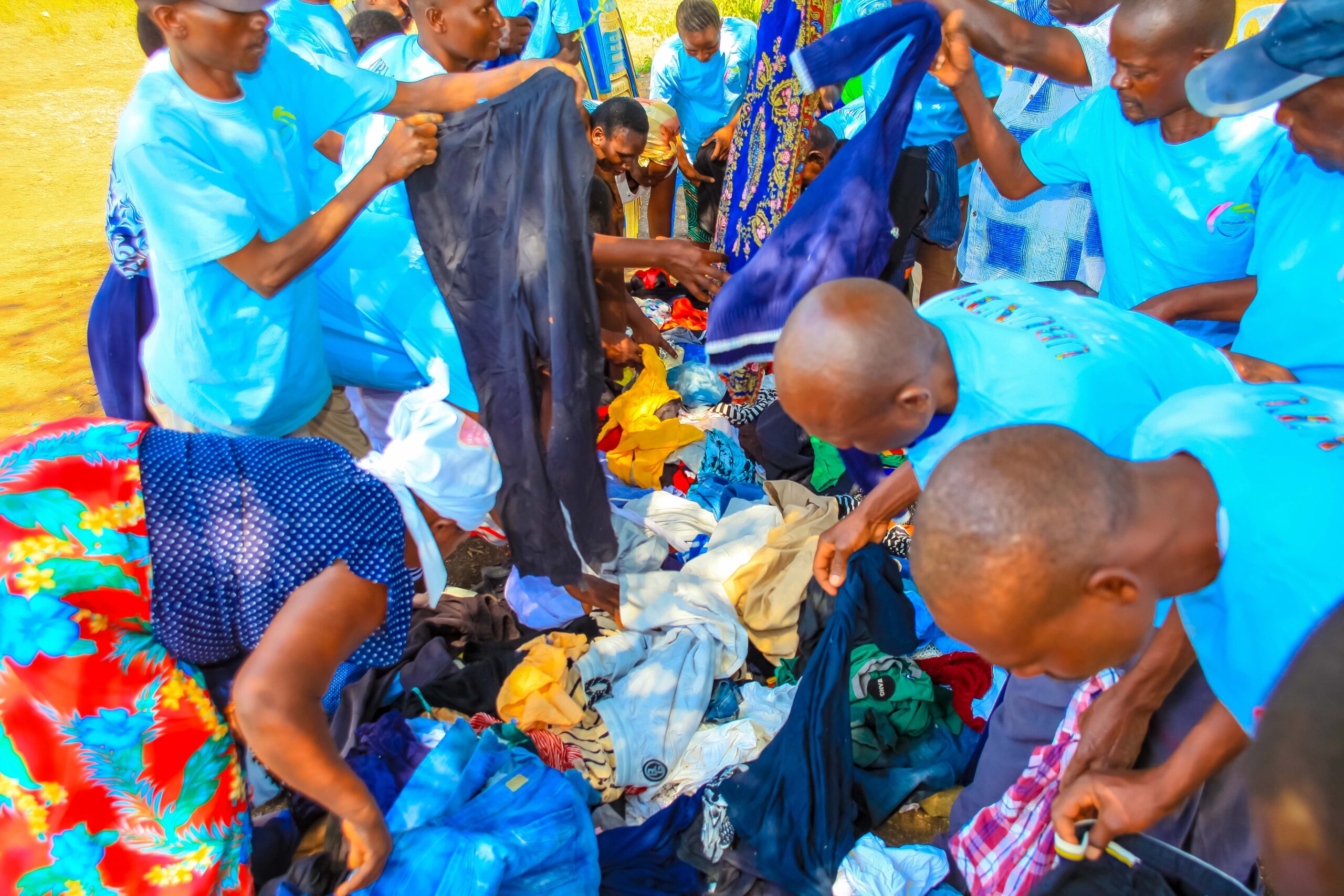
SIC's donation of clothing to vulnerable men in the community is a first step toward restoring their standing in society.
In every community there are men who slip quietly out of sight. Without steady work, without money set aside, and often without decent clothes to wear while looking for either, they find themselves on the edge of the society they once belonged to. The Sustainable Innovation Centre (SIC) set out to change that, beginning with something as simple as a change of clothes.
Reaching the Men Who Are Overlooked
Much of community support is aimed at women, children and youth, and rightly so. But vulnerable men can be left with nowhere to turn. SIC identified needy men in the community whose circumstances had left them exposed and struggling to hold their place in society.
The clothing donation was designed as an act of practical help and of respect: a way of telling these men that they matter and have not been forgotten.
“Dignity often begins with how a person is able to present himself to the world.”
More Than Cloth
Clothing may seem a small gift, but it changes how a man is seen and how he sees himself. Decent clothes make it easier to approach an employer, to take part in community life, and to walk with confidence among neighbours.
For many of the men, the donation was the first step back toward being treated as valued members of the community, with the aim of improving their status quo in society.
A First Step, Not the Last
SIC does not see the donation as an end in itself. It is the opening of a relationship. After the clothing was given out, SIC continued working with the men, nurturing them and encouraging them to join Ubuntu Savings Groups so that the help would lead to lasting change.
That follow-through is what turns a donation into development, and it has already begun to show results in the men's homes and lives. That story is told in our companion dispatch.
Give Where It Counts
If you would like to support clothing donations and other dignity-restoring work in Homa Bay County, reach out to SIC to learn how you can partner with us.
SIC Impact Story
From Seedlings to School Fees
How a greenhouse supported by Ubuntu International is growing hope at Mango Comprehensive School
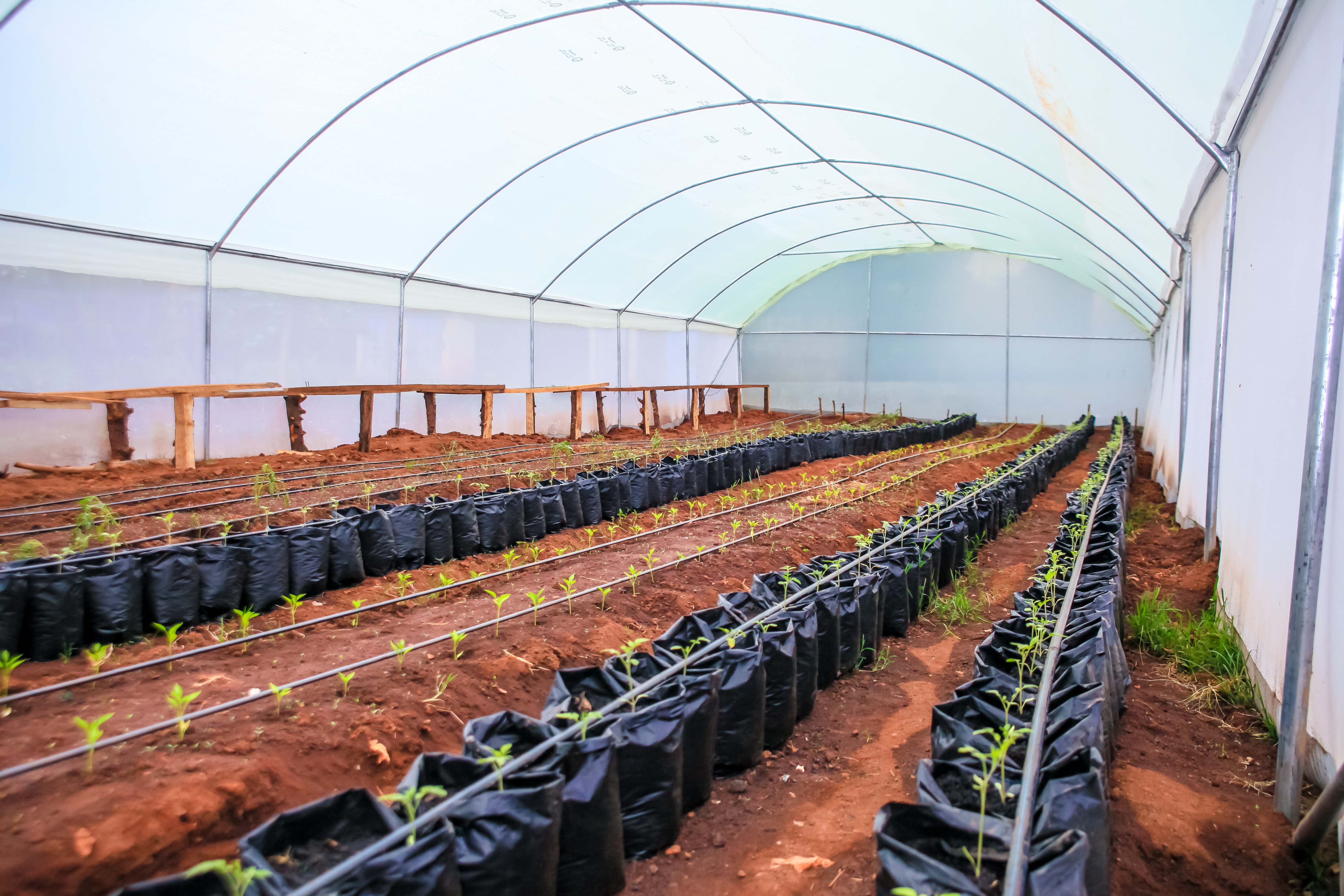
At Mango Comprehensive School, a small seedling can represent something much bigger than a young vegetable plant. It can represent a learner discovering their potential, a parent finding renewed hope, and a family seeing new possibilities for keeping a child in school.
The greenhouse supported by Ubuntu International has become a place where classroom lessons come alive and confidence takes root. Before it, learning about agriculture could remain largely theoretical. Today, learners get their hands into the soil, sow seeds, nurture young plants and watch their efforts grow into healthy vegetable seedlings. The Competency-Based Education (CBE) curriculum becomes something they can see, touch, practise and share.
“The most important lesson is not simply how to grow a seedling. It is discovering what they can do with the knowledge they have acquired.”
A Learner Who Can Now Bring Something Home
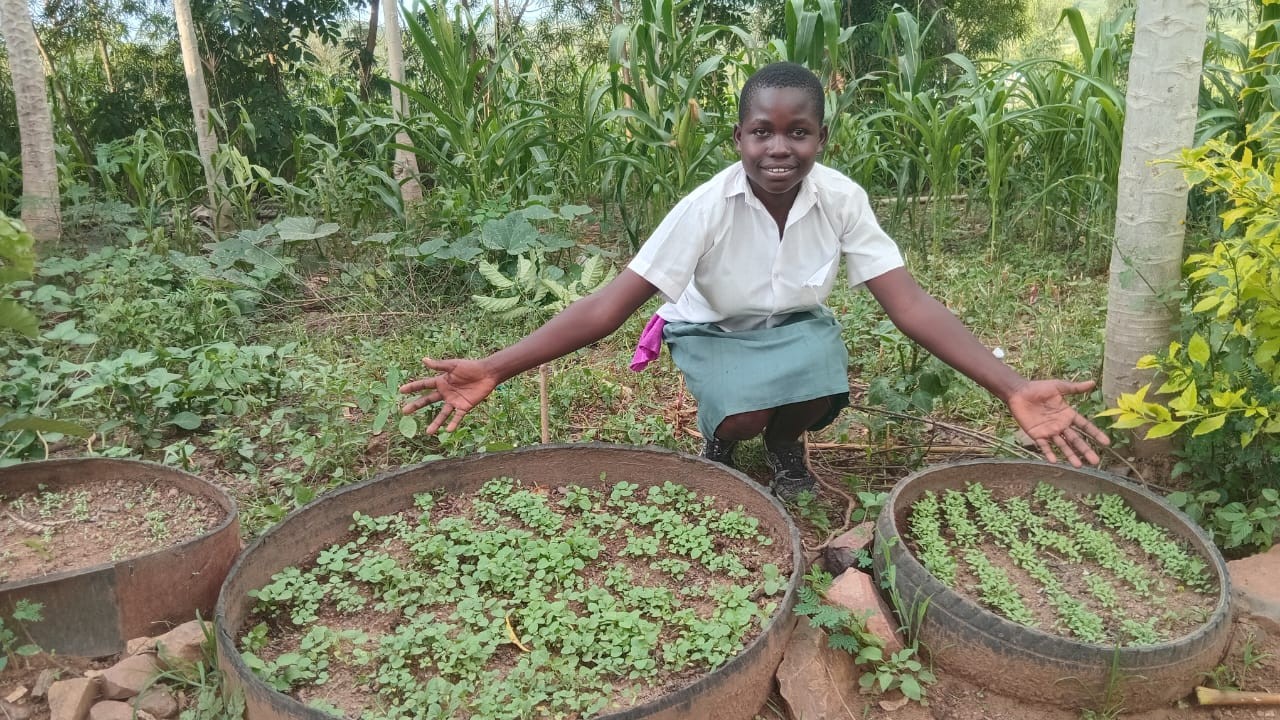
Picture a learner returning home after a day at school, carrying knowledge that can make a difference to the family. Instead of only talking about what was taught in class, they can explain how to prepare a seedbed, sow vegetable seeds, care for young seedlings and transplant them into a garden.
At Mango, learners are applying these skills by planting vegetables both at school and at home. For parents, this offers a different kind of pride: their children are not only progressing through school, they are acquiring useful skills that can contribute to household food production and potentially create income.
When a Learner's Work Becomes Valuable to the Community
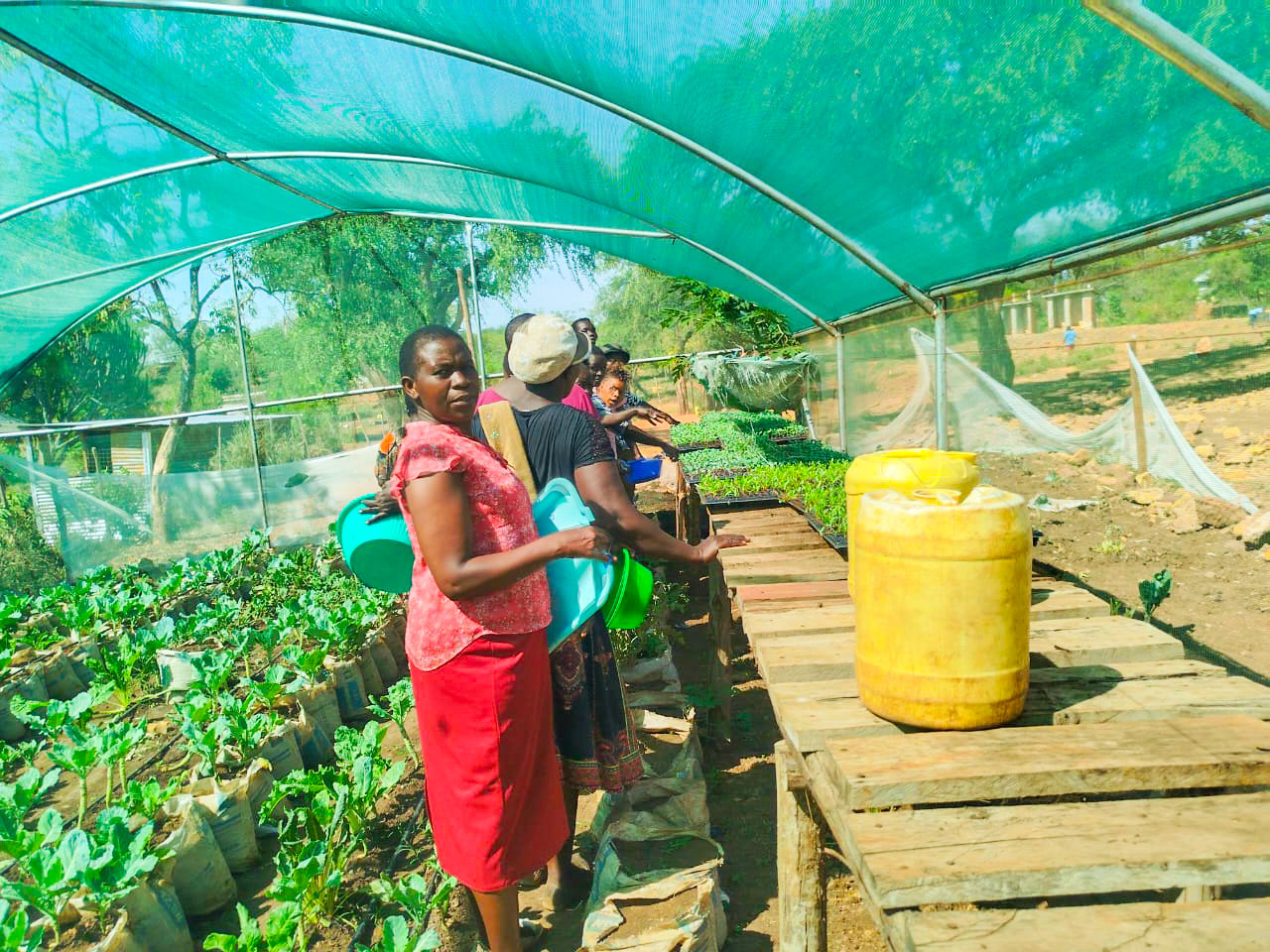
The real breakthrough came as learners began producing quality vegetable seedlings that attracted the attention of community groups. People who needed seedlings for their own agricultural activities could now purchase them from the school, and the learners' work moved from classroom practice into a real community market.
Think of what this means for a young learner. The time spent sowing, watering and monitoring growth is no longer just an assignment for a teacher. It produces something other people value enough to buy. That experience can change how a learner sees themselves. They begin to understand the link between effort and results, quality and customer satisfaction, and practical knowledge and economic opportunity.
When Seedlings Help Keep Education Within Reach
Perhaps the most significant dimension of this initiative is its connection to education financing. Income from the sale of vegetable seedlings has been used to support learners with school fees and educational needs, helping address some of the financial pressures that can make continued schooling difficult for families.
The money may come from the sale of small seedlings, but its significance is much greater. It connects practical learning with the opportunity to remain in school and keep building a future. Sustained income, careful financial management and continued community participation will be important in maintaining these benefits.
The Pride of Parents
Parents can see the results of their children's learning. They can buy seedlings produced by the learners, use the knowledge shared with them, and appreciate the contribution young people can make to their homes and communities. Education becomes something parents experience through their children's actions, not only through examination results.
The learners are becoming champions of seedling propagation, not because they were given a title, but because they are developing skills that have practical value.
A Greenhouse That Keeps Giving
As the school strengthens its seedling production, maintains the greenhouse and reinvests appropriately, the initiative has the potential to generate ongoing income, improve practical CBE delivery, encourage home gardening and deepen community participation. It serves as a learning space, a small production unit and a platform for developing entrepreneurial skills.
For Sustainable Innovation Centre (SIC), the experience reinforces an important lesson: sustainable development begins when communities are equipped not only with resources, but also with the knowledge and capacity to use them productively.
Growing a Future, One Learner at a Time
The greenhouse does not promise to solve every challenge facing the school or its families. But it shows what can happen when learners are given the opportunity, resources and guidance to turn knowledge into action. A seedling begins small. With the right conditions, it grows strong enough to be transplanted, take root and produce a harvest. The same is true of the learners at Mango.
Every Seedling Carries a Lesson
With Ubuntu International's support, the greenhouse is growing more than vegetables. It is nurturing capable learners, strengthening community connections and creating new possibilities for keeping children in school. To partner with SIC in supporting practical learning, reach out to us.